Browse Arabic comprehensible-input videos by level, topic, guide, dialect, and plan.

Nour 24: Men Are Like Little Children
Muhannad did not come home on his wedding night. He slept on Anwar's boat, and the company secretary has to call to wake him up because his grandfather wants him at work. Anwar teases him about who exactly he angered: not your grandfather, your wife, and she angered him. Look at yourself in the mirror before you tell me you prefer my company to hers. And in the villa, Noor stands crying and turning the ring on her finger, begging her grandmother to stay one more day. Safiya cannot stay, so she leaves her with advice instead: الرجال مثل الولد الصغير. Men are like small children, you have to humor them. Be patient, the way your aunt Halima was patient, and in the end he will do anything to please you. This video opens show episode four, so it starts with a full recap of everything so far. I explain داريه, مو فارقة معي, طقم, and مرمر حياتها. Next episode: the grandmother's car pulls away.
Intermediate (B1) | premium | 00:18:17
Nour 23: I Would Have Run the First Day
Nour sits with the sentence her husband left her. Then the advice starts arriving. Ahmad, still in the hospital, tells Dana that Muhannad is not responsible, that he must learn to care for his own house, and insists he will come to love Noor. Dana disagrees on every point and says the thing nobody else will: if I were her, I would have run the first day. And Sharifa comes to Noor's room with a softer voice than usual. I am like your mother. Be patient with him, be wise, if he pulls, you loosen. His father is ill, he is overwhelmed. Noor says plainly that she cannot stay, and Sharifa answers with the sentence that closes the trap: last time he ran, his father fell ill. If you run now, who knows what happens to Fikri Bey. Stay, endure, be wise. Nobody asks Noor what she wants. This is the end of show episode three, and I ask you at the end: should I keep going with this series? Tell me in the comments. I explain مصدومة, بدهم ياك, رعبتيني, بنت الحما, and حرمك من الميراث.
Intermediate (B1) | premium | 00:19:12

One Fairuz Song Made Her Learn Arabic.
Emily is from Montreal. Two years ago she heard one Fairuz song, قديش كان في ناس, and decided to learn Arabic so she could sing it. That is not a metaphor. She learned the letters first purely so she could pronounce the lyrics, sang along without understanding a word, and only then went looking for meaning. Sound first, meaning later, which is the whole argument of this channel arriving from someone who found it on her own. In this conversation Emily tells me how she got from a song to real conversations: an app, then lessons with Lebanese and Palestinian teachers, then Fusha, and now Moroccan Darija, because her goal is nothing less than all of Arabic. She talks about the sound ع that made her think a language might be impossible and then made her want it more, about treating dialects as a matter of respect for the people she lives beside in Montreal, and about the one thing she would tell any beginner: pick one dialect, start speaking, and stop over-thinking the choice. She also says the honest thing about Arabic: she loves the language, and what frustrates her is how few good resources exist for it. That is the reason this channel exists. A real, unscripted conversation in clear Arabic, around B2.
Intermediate (B2) | free | 00:48:54
Nour 22: Don't Wait for Me
Two women wait tonight. Israa lights a candle, pours the wine, puts on a dress, and Tariq never comes. She blows the candle out herself. And in the villa, Noor sits on the bed in red, nervous, waiting for her husband. Muhannad walks in, says hello, says he is going to shower, and stands under the water without getting in. Then he comes out and says it: do not wait for me, do not expect anything from me. We are not married. You married my grandfather, not me. Consider yourself locked in this room. I will never come near you, or even touch you. Then he leaves. Noor is left with the sentence. Meanwhile Tariq stays home, invites Maysoun to breakfast, and she lights up like a girl. Two marriages, opposite directions, same night. I explain متلبكة, فايت أدوش, عازمك على الفطور, and يتاوب. Next episode: what Noor does about it.
Intermediate (B1) | premium | 00:21:00

She Left Syria for a One-Month Holiday. She Came Back 14 Years Later.
In 2012 my family flew to Saudi Arabia for a holiday. Because of the war, we never went home. We moved from country to country, and the road eventually ended in Montreal, which has been home for years now. This summer, my sister Lotus went back. In this conversation she tells me everything: the fear before deciding, landing in Damascus, the three-hour road to Salamiyah past buildings still in ruins, and the moment she knew she was home before she saw a single face, the sound of the mitoor and the smell of bread and shawarma. She sees her grandmother, her childhood friends, her uncle. She eats معجوقة. She does four or five زيارات a day, no appointments, just doors that open. And she is honest about the heat, the electricity, and the sadness of the damage. A real, unscripted conversation in clear Arabic, around B2. If your family left somewhere and never went back, you already know why this one matters.
Intermediate (B2) | free | 00:16:31
Nour 21: Give Me Your Phone
Nour is one of the most-watched Turkish dramas in the Arab world, dubbed in Syrian Arabic. In this scene, Maysoun and her husband Tariq are eating dinner alone when his phone buzzes and he stands up to leave. Work, he says. His brother is sick, everything is on his head. She asks for the phone. He hands it over, wounded and generous, and she looks anyway. Then the line that ends the argument: I know you deleted it. Earlier, Noor clears the dinner plates and her new mother-in-law stops her cold: you are a Shadoglu now, the servants do that, go rest in your room. A welcome that sounds like a demotion. I walk you through every scene in clear Levantine Arabic and explain the real expressions as they come: كنيتك, لساتك عروس, شغل صار فوق راسي, محاية, and تقرير يومي. This is one episode from my full Noor series, where we watch the show together from the very beginning. The whole series is on the platform: https://arabicallthetime.com The full library, 350+ videos in Modern Standard Arabic and Levantine Arabic organized by level from Super Beginner to Advanced: https://arabicallthetime.com
Intermediate (B1) | free | 00:13:00

Nour 20: They Have Nothing to Say to Each Other
Nour and Muhannad are married and they barely know each other. Tonight the whole family eats together, Safiya is leaving for the village, Dana is fighting with her grandfather about a trip back to America, everyone is talking at once. And the newlyweds sit there in silence. Meanwhile Bana confronts her brother Fajr about Aisha, the fashion model he is seeing, and the magazine spread that could reach their grandfather. If he forbade Nihal, what do you think he will do about a model? Fajr storms out. After dinner, everyone leaves the table and Noor and Muhannad are alone for the first time as husband and wife. I explain معرض, عارضة أزياء, الثري, بدبر راسي, and دايمة إن شاء الله, what Syrians say when a meal ends. Next episode: what they say when nobody else is in the room.
Intermediate (B1) | premium | 00:17:37
Don't Learn the Arabic Alphabet Yet
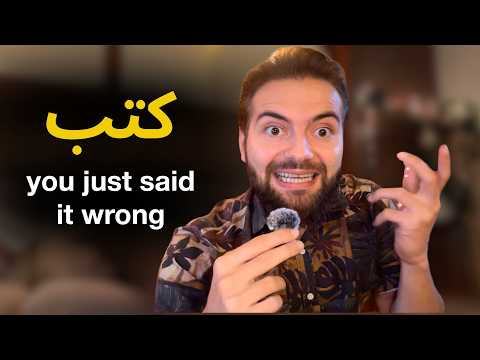
Everyone wants to learn the Arabic alphabet first. It is beautiful, it is artistic, and I am asking you to wait. Reading too early damages your pronunciation in any language. You sound out words you have never heard, you get them wrong, and the wrong version is the one that sticks. Arabic makes this worse, because the short vowels are not written. Look at كتب and tell me which word it is. You cannot, unless you have heard it first. Learn the sounds first and Arabic hands you a gift almost no other language offers: spelling and pronunciation that match perfectly. Listen first. Read later, faster, and correctly. That is the deal. The full library, 350+ videos in Modern Standard Arabic and Levantine Arabic organized by level from Super Beginner to Advanced: https://arabicallthetime.com
Intermediate (B1) | free | 00:11:39

Nour 19: Treat Her Accordingly
Nour and Muhannad are married. Now the family decides what that actually means. Dana takes her mother's call while doing her makeup, having skipped the marriage contract entirely. Maysoun asks the question nobody wants answered, why the rush, and gets the only answer this family gives: it was your father's decision, and nobody crosses him. Then Sharifa pulls her son aside with an instruction that lands like a warning: your grandfather is upset about what you did, don't let him feel a thing, and treat the girl accordingly. At the hospital the congratulations come anyway. Hands kissed, foreheads touched, الف مبروك all around, and a grandfather who wants a great-grandchild immediately. I explain مزعوج, نفسيتها حامضة, الحمد لله على السلامة, حديد, and يقبرني هالوش, the affectionate expressions Syrian families actually use. Next episode: what married life in this house looks like.
Intermediate (B1) | premium | 00:18:20

Do You Need Grammar to Learn Arabic? (B1–B2)
Can you learn Arabic naturally through listening, or do you need to study grammar? In this spontaneous conversation, Hasan and Maha discuss language acquisition, speaking, grammar, reading, and the importance of listening to comprehensible content. Maha speaks in Lebanese Arabic, while Hasan speaks in Syrian Arabic, making this video great listening practice for intermediate Arabic learners.
Intermediate (B2) | free | 00:25:44
Nour 18: We Have to Get Married. Now.
Nour's bag is packed. She wants to leave and never come back, and her grandmother is begging her to remember what Fikri Bey did for this family. Then Muhannad runs down the stairs, sees the suitcase in the hall, takes a breath, and walks out to the balcony where she is standing in the cold. He asks about his father. She answers. And then, with his hand on her back: نور، لازم نتجوز. وبسرعة. Minutes later the contract is read in Fusha, both say نعم, and the family says مبروك. Two people from two different worlds, married in a hurry, with everything still unresolved between them. I explain يروح فيها, بعيد الشر, طولي بالك, and العرف السائد. If you want the story to continue, tell me in the comments.
Intermediate (B1) | premium | 00:15:36
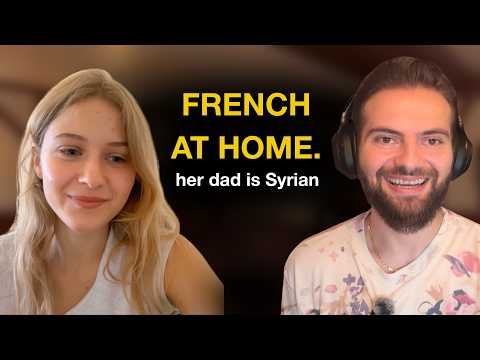
Her Father Is Syrian. He Never Spoke Arabic to Her.
Colette's father is from Syria. He spoke French with her. She grew up in California, in a house of English and French, and the Arabic never came home. So she went after it herself. An evening class at fifteen, with her grandmother helping her practice. Three years of Fusha at university in France that never turned into real understanding. Two months in Jordan, working at a center, studying, living inside the language. A Levantine textbook she worked through alone. Five years of trying. In this conversation she tells me what finally started working, and why her goal is Levantine: to speak with her family, and one day in the streets of الشام. A gentle, patient conversation in clear Arabic. If the language of your family was never handed to you and you want it anyway, Colette is proof the door is still open. We agreed to record again once she has real listening hours behind her, so this story continues here. The full library, 350+ videos in Modern Standard Arabic and Levantine Arabic organized by level from Super Beginner to Advanced: https://arabicallthetime.com
Intermediate (B2) | free | 00:24:12
Nour 17: He Walks Back Into the House
Muhannad comes back, and the whole family is standing in the hospital corridor waiting for him. Dana crying, Bana furious, Othman ready to strangle him, and his mother asking the only question there is: ليش هيك سويت معنا؟ He says forgive me, and she forgives him instantly. Then Nada brings the news that the danger has passed, and the corridor fills with الحمد لله على السلامة, the phrase Arabs say when someone recovers, or comes home from a journey. Inside the room, his father asks one thing of him: make it right with your grandfather. Muhannad promises to fix everything. The grandfather watches him leave and says: let him go, let him discover his mistake. I explain الحمد لله على السلامة, تراضي, and زال الخطر. Next episode: how he fixes it.
Intermediate (B1) | premium | 00:13:51

Nour 16: Why Did He Do This to Me?
Muhannad ran. His father Ahmad has a stroke and is rushed into intensive care. Noor packs her bag in tears, asking the only question that matters: if he did not want me, why not say it? Why disappear on the day of the contract? Her grandmother tells her they cannot leave now, because of what people will say, and in this video I talk honestly about حكي الناس, how heavily other people's talk weighs in Turkey and the Arab world compared to Canada. And Fikri Bey, who forced this marriage, says the sentence that turns him human: I made a mistake, and the price was very high. I explain جلطة, مغمى عليه, العناية المركزة, and حكي الناس. Next episode: Muhannad faces the family.
Intermediate (B1) | premium | 00:18:05
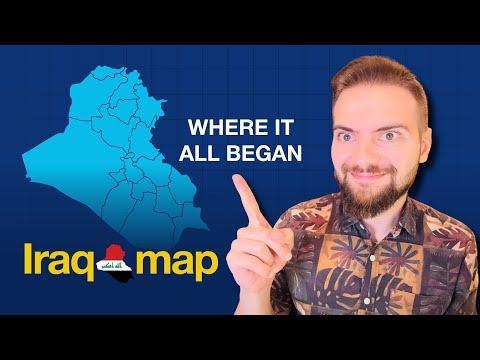
Iraq: The Oldest Country on Earth
Iraq is the oldest country in the world. Not one of the oldest. The oldest. Today we travel to Iraq on the map: where it sits in western Asia, why it is the heart of the Fertile Crescent, and how the agricultural revolution that changed the human story began between its two rivers. The video opens with verses of poetry about Iraq, because a country this old deserves to be introduced in verse. This is the first stop in a new series about the Arab countries, one by one. Syria, Lebanon, and Yemen are coming. Slow, clear Arabic with the map on screen the whole time. Follow the map, and the Arabic follows you.
Intermediate (B1) | free | 00:14:15