Browse Arabic comprehensible-input videos by level, topic, guide, dialect, and plan.
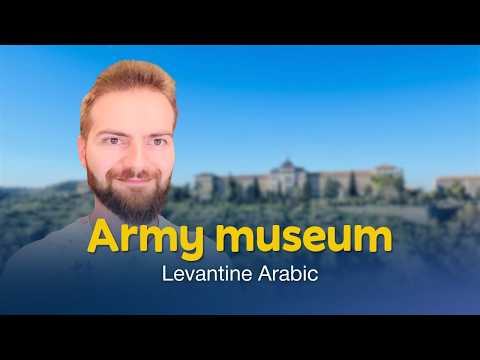
Why Is There a Helicopter on This Palace?
The Alcázar sits above everything in Toledo. It is enormous, built out of stone, and there is a tower on every single corner of it. Up on the terrace there is a large empty courtyard with one car parked in it, three statues of men I could not identify, the Spanish flag with its coat of arms, an old military helicopter and a green tank. The palace is an army museum now, so that is why. Inside there is a knight in old armour on a brown horse holding an arrow, rooms of antiquities, and a statue from Mexico that I liked more than anything else in the building. The inside of the palace itself is stripped back, very old and largely bare. The view out of it is worth the climb on its own. Afterwards I walked back out into the city, and it was Christmas, and the whole place had changed. Simple descriptive Levantine Arabic, around A2. Vocabulary: مبنى, حجر, برج, زاويه, ساحه فاضيه, تمثال, دبابه, متحف حربي, فارس, حصان.
Beginner (A2) | premium | 00:12:00
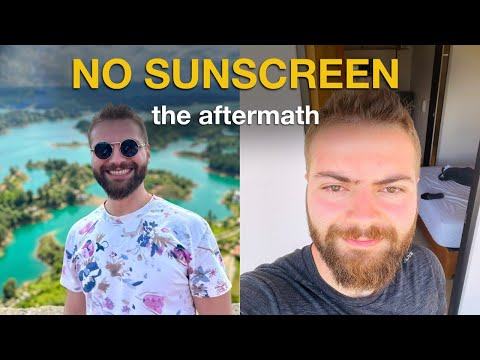
The Biggest Rock I Have Ever Seen
Guatapé is a tiny village in Colombia, and next to it there is a rock. Not a mountain. One rock, standing on its own, and it is enormous. The first time I saw it I was genuinely stunned. Around it there is a lake, forest, villas all along the water, and a mansion that I was told belongs to a singer. We crossed by boat and then we climbed. The stairs are concrete, built up through a crack in the rock, and they go up and up and up. The sun was strong. I was with a group and by the end of it people were in a bad way. I did not cry. I came close. Then you reach the top and you forget all of it. The lake is green and blue, the sky is clear, white clouds, forest in every direction. It is one of the best views I have ever stood in front of. Afterwards we went down into the village, which is small and about as colourful as a place can be. Colombians love colour. There is a street with umbrellas strung across it in yellow and green and orange and red, flags from everywhere including Canada and Mexico, and souvenir shops full of hats. I did not buy a hat. And at no point did I put on sunscreen. The next day my face was red. My cheeks, my nose, my forehead, even my eyes. I burned. Learn from me. Simple descriptive Levantine Arabic, around A2. Vocabulary: صخرة, درج, بحيرة, منظر, غابة, شمسية, نظارات شمسية, واقي شمس.
Beginner (A2) | free | 00:17:14
Nour 27: This Is Garbage. Throw It Outside.
تعي لشوف. And then Sharifa turns on her. شو هاد يلي عملتيه؟ شرشحتيني قدام الضيوف. Noor has no idea what she did. She served guests. She was praised. That was the crime. Sharifa picks up the embroidery Noor has been working on all day, the same work every guest in that room admired, and throws it on the floor. هي زبالة. Garbage. Take it outside. انتِ هون خانم، مرت مهند شاد أوغلو، مو خدامة. You are a lady in this house, the wife of Muhannad Şadoğlu, not a servant. يا عيب الشوم عليك. It is said the way you speak to a child who has lied. Elsewhere in the city, Dana takes a call from Kamal, and the calm goes out of her voice the second she asks for Alma. لمين تركتها؟ ما عم صدّق شو عم تحكي. Then someone knocks on Noor's door, and Noor hides the embroidery before she opens it. It is Maysoun, who looks around and says the room finally has life in it, and tells Noor that if anyone in this house upsets her, come straight to me. Noor says nobody is upsetting her. I explain شرشحتيني, زبالة, خانم, خدامة, يا عيب الشوم عليك, and لسانها طويل. Next episode: Muhannad's first day at work lasts about an hour.
Intermediate (B1) | premium | 00:15:55
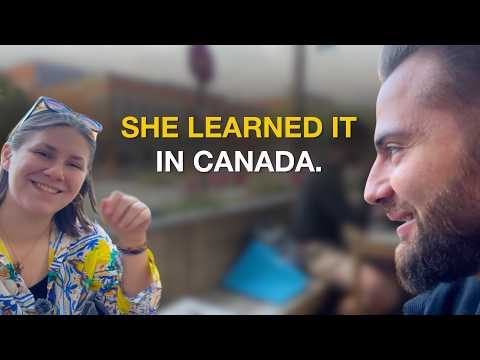
I Finally Met the Montrealer Who Speaks Arabic Like This.
A while ago I interviewed Amélie about how she learned Arabic. We had only ever spoken online. She lives in Montreal, I live in Montreal, so we finally met in person. The café was not a random choice. Maha mentioned once that she has a friend here with a Lebanese café in the Plateau, and I had never been. So that is where we went, for manoushe with cheese and zaatar and a long conversation. Amélie learned Lebanese Arabic to a level that still surprises me, and the reason she started was Fairuz. Now she is doing the whole thing again with a completely different dialect, Moroccan Darija, and the reason this time is Moroccan rap. So I asked her what everybody argues about. Is Darija a dialect of Arabic or a separate language? Her answer is better than either side of that argument, because it comes from someone who speaks French, Italian and Spanish and can hear exactly what is happening: it is the vowels. Lebanese puts them where she expects them. Darija does not. You also hear her Lebanese with a few Moroccan words living inside it now, which I noticed within about thirty seconds of sitting down. Come with me for the whole thing: the drive across town, a parking machine I could not find, a sunny Sunday in the Plateau, and a conversation in clear Levantine Arabic, around B1.
Intermediate (B2) | free | 00:17:39
40 Minutes to Shop Before Costco Closes
It is twenty past six on a Sunday evening. Costco closes at seven. I have forty minutes. Come around the store with me in clear Levantine Arabic. The electronics aisle, a lamp I loved and did not buy, the meat counter where a striploin is thirty six dollars a kilo, a ribeye is fifty, and a tomahawk is sixty. Chicken thighs and drumsticks, a dorada I could not walk past, two flats of eggs, milk, tissues, hummus, halloumi, a French cheese made right here in Quebec, and four jars of instant coffee because there was three fifty off. This is the first time I have filmed inside a big public store and I honestly did not know how people would react to a man walking around talking to a camera. You find out at the same time I did. At the checkout there is a queue, because it is Sunday, and Arabic in every accent around me: Syrian, Lebanese, Moroccan, Algerian. On the way out I tried to guess where the man checking receipts was from. I got it wrong the first time and right the second. Everyday vocabulary you will actually use in a shop: عربايّة, قسم المحاسبة, الكاشير, صفّ بيض, علبة محارم, عرض, خصم. Around B1.
Intermediate (B1) | premium | 00:12:42
Two Arabic Words Hiding in This Spanish City
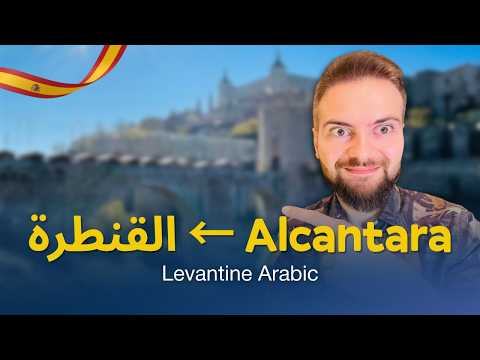
Toledo has an old stone bridge over the river. Its name is Puente de Alcántara. القنطرة is an Arabic word. It means the arch. The most beautiful building in the city is the Alcázar. القصر is an Arabic word too. It means the palace. That is what this city does to you if you speak Arabic. You keep hearing your own words come back in a Spanish accent. In this one I come out of the station and walk. The river, the old stone bridge with a little market of shops along it, a tower, the city gate, the walls, and above all of it the Alcázar. Then across the bridge, through the gate, and up the stairs into the city. The weather was clear, sun, no clouds, and cold. Five or six degrees. And I should say it: in these photographs I look happy and I was very ill. My chest was inflamed, I was coughing constantly, I could barely talk. I went anyway. Simple descriptive Levantine Arabic, around A2. Vocabulary: نهر, جسر, حجر, قنطره, قصر, باب المدينه, سور, برج.
Beginner (A2) | premium | 00:11:13
He Walked Into Damascus and Felt He Was Home
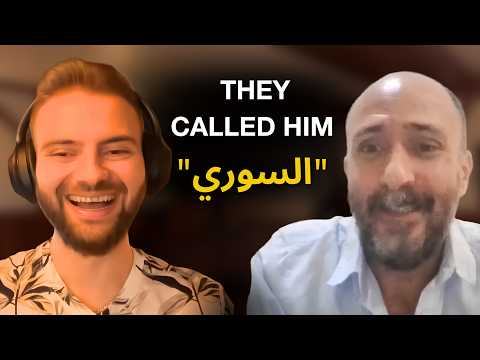
Agustín is from Buenos Aires. He has no Syrian family, no Lebanese family, no Arab family at all, Italian and Spanish and Irish on every side. He speaks Spanish, English, French, Portuguese and Arabic, and he is learning Italian. He started Arabic in 2006, because he was studying international relations and kept running into a part of the world he could not read. He learned Fusha the traditional way, then went to Egypt and used it out loud, and Egyptians laughed at him, because nobody in Egypt talks like that. That was the first thing he learned. In 2007 he went to Damascus. He says that within the first second he felt like he was in his own country. Part of it is the mate, which Syrians drink the way Argentines do. Part of it is that three and a half million Argentines are of Syrian and Lebanese origin, and one of them became president. And part of it is the day he lost his clothes in Souq Saruja and neighbours he had known for fifteen minutes sat him down and fed him. He lived in Syria on and off until 2010. Then Lebanon, then Jordan through covid, then Yemen, then Sudan. In Yemen people heard his accent and started calling him السوري. Last year he went back to Syria for the first time in fifteen years. He crossed in from Jordan, saw the sign that said أهلاً وسهلاً بسوريا, and he describes that moment better than I could. He also describes what he saw in Homs and in the Damascus countryside. We talk about the thing every learner is afraid of: if I learn Levantine, will anyone else understand me? His answer comes from having actually tested it in six countries, and he has the best analogy for it I have heard, which involves the word for popcorn in Spanish. His advice at the end is simple and he lives by it. Listen every single day, half an hour to an hour. Read short stories and newspapers. And speak, even when all you have is two words and your hands. Conversational Levantine Arabic, around B2.
Intermediate (B2) | free | 00:37:17
Nour 26: Don't Talk. Just Nod.
Her grandmother's car is gone. Sharifa's first order arrives within the minute: go wash your face and change those clothes. Guests are coming to see Ahmed, who comes home from hospital tomorrow. Maysoun arrives from the other direction, glowing, because Tariq took her out for breakfast by the sea. Everyone stares. نحن دائماً أنا وطارق بنعمل هيك. They do not. Upstairs, Noor is embroidering when the maid knocks. Guests. And then the coaching: don't be flustered, they will love you, nod your head while they talk, keep your head up, and if they compliment you say thank you, هذا من ذوقكم. انت حلوة كثير لأنك على طبيعتك. Downstairs it goes better than anyone expected. One of the women takes Noor's hand and kisses it. The guests pass her embroidery around the room. And with every compliment, Sharifa's face changes a little more. When Noor reaches for the tray to serve, the maid holds on to it. Then Sharifa says four words. تعي معي، عوزتك. I explain متلبكة, ما في داعي, على طبيعتك, هزّي براسك, كنّة, and الضيافة. Next episode: what Sharifa wanted to say.
Intermediate (B1) | premium | 00:16:36
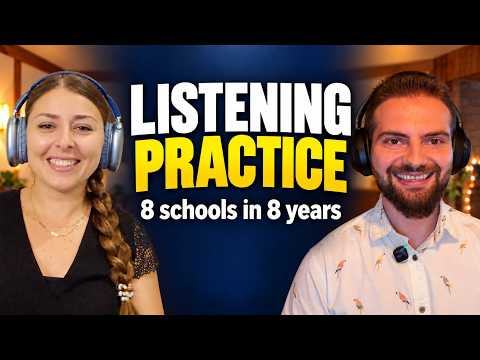
From Syria to Canada: Hasan’s Story
What is it like to attend eight different schools in eight years? In this Lebanese and Syrian Arabic conversation, Hasan shares his experiences growing up between Syria and Saudi Arabia, facing culture shock, and rebuilding his life after the war prevented him from returning home.
Advanced (C1) | free | 00:30:25
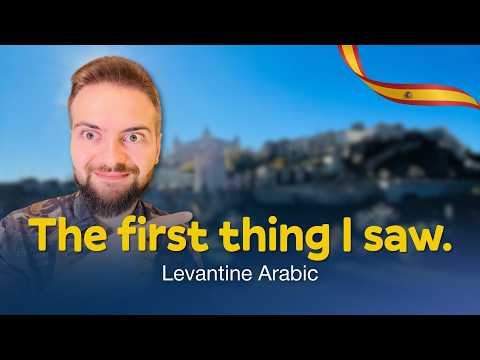
This Train Station in Spain Looks Arab
Toledo was the capital of Spain. Madrid is new. Toledo is very, very old, and I had wanted to go there for years. This is the first of six videos going through the photographs, and it does not get further than two train stations. The first is Madrid. A new station, clean, no rubbish anywhere, a lot of concrete. I like concrete a little. Not this much. Then the fast train, and then Toledo, and I was not ready for it. The station at Toledo is old and it is far more beautiful than the one in Madrid. Carved wood on the doors, ceramic tiles, a cafeteria inside with tables and chairs under it all, and the whole thing built in Arab and Islamic decoration from Al Andalus. I came out of that station, walked a short way, saw the city, and understood that one video was not going to cover this. Simple descriptive Levantine Arabic, around A2. Vocabulary: محطه القطار, قطار سريع, قطار بطيء, نظيفه, قديمه, جديده, الديكور, خشب.
Beginner (A2) | free | 00:11:29
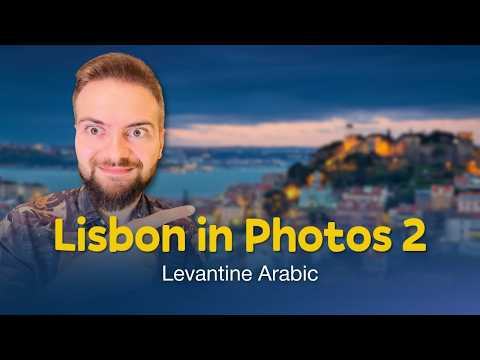
They Drink Coffee at Night in Portugal
People in Portugal drink coffee at night. Not a small one either. Actual coffee, late in the evening, sitting outside. I watched them do it and I could not understand it, because if I drink coffee at night I am awake until morning. This is the second half of the photographs from the trip to Lisbon with my sisters Yasmine and Lutus, at Christmas 2023. A selfie from directly underneath the Christmas tree with the lights above us. A photo at the house of friends of Yasmine and Lutus, five of us, an enormous lamp behind our heads. A walk along the water with Yasmine, clear sky, one aeroplane and one white line across it, jackets on, because December in Lisbon is cold enough for a jacket. Then dinner, which is the real reason I look happy in these pictures. Dorada. Grilled. Me and dorada are in love and I am not exaggerating. There is boiled potato and fried potato and salad and a grilled chicken thigh on that table as well and I barely looked at any of it. After that the Christmas market, a very large park with a very large tree, a view out to the sea with mountains far behind it, an old church we walked around inside, and the famous pastry shop in Belém where we ordered too many sweets and drank espresso. Single espresso. Espresso in Spain and Italy and Portugal is one of the great pleasures of travelling in Europe. The last photographs are the tower at Belém at sunset, a name I still cannot pronounce properly, and Yasmine walking across the grass while the sun went down. If you want more videos like this one, going through photographs from places I have been, tell me in the comments, because I have a lot of them. Simple descriptive Levantine Arabic, around A2. Vocabulary: اضواء, كورنيش, سمك مشوي, بطاطا مسلوقه, حديقه, كنيسه, اسبريسو, مغيب الشمس.
Beginner (A2) | premium | 00:17:17
The Only Rule for Watching Comprehensible Input.
When you watch comprehensible input, you do not need to do many things. You need to do exactly one: focus. Follow the idea. Follow the story. Follow what the person is trying to say, and let go of every word you do not catch, because you do not need them all. Missing words is fine. Missing the video is not. There is an honest exception. If you are upper intermediate or advanced, listening while driving or cooking works, slower but it works. If you are a beginner, your full attention is the whole method. Better than nothing is real. But focused, relaxed, enjoying the story, that is where the language actually moves in. Next video: how to learn without understanding every word.
Intermediate (B1) | free | 00:08:11
Portugal Puts an Egg on Everything
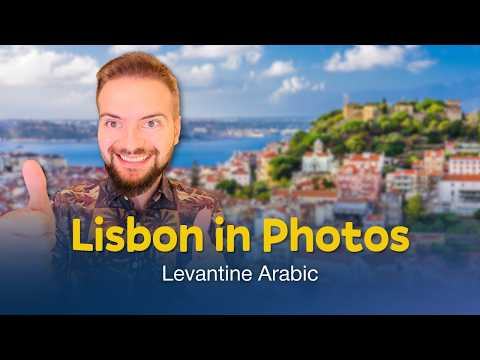
Portugal puts an egg on everything. I went to Lisbon with my sisters Yasmine and Lutus at Christmas 2023, and this is the first of two videos going through the photographs. The first one is me, extremely happy, eating a steak. There is a fried egg on the steak, because in Portugal there is always a fried egg on the steak. There is an egg in the burger. The desserts are made of egg. I saw a cake in the shape of an egg. I like eggs. I was not prepared for this. The one thing they will not put an egg on is fish, and they love fish, so the next photo is grilled sardines and chips. Then the part of any city I look for first. I always find the viewpoints, always, so we climbed above Lisbon and looked at the whole thing. Pink buildings, yellow buildings, beige and blue and white, and terracotta tiles on every single roof in the city. There is a selfie with Yasmine and Lutus at a famous gate whose name I could not remember on camera. A square with a Christmas tree and a Christmas market and a statue up on a column. The castle, which I did not go into, because I had heard that most of what is standing is a reconstruction. In every photograph from this trip I look happy, and I was in fact very ill. There is a reason for that, it involves something stupid I did in Porto, and that is its own video. Simple descriptive Levantine Arabic, around A2. Vocabulary: بيض مقلي, بطاطا مقليه, سردين مشوي, بنايات ملونه, قرميد, سطح, السما صافيه.
Beginner (A2) | premium | 00:18:20
Nour 25: You Don't Know Anything
Safiya packs her bag and tells Noor not to worry: Muhannad is good like his father, his heart is clean, just help him settle into his home. And Noor says it. ستي، انتي ما بتعرفي شي. You don't know anything. Then her grandmother asks what happened, and Noor backs away from the truth. Nothing happened. I'm just sad that you're leaving. At the company, the family divides the work: Bana runs the textile department, Fajr assists between classes, and Muhannad takes his father's place. When he tries to speak to his grandfather, he is sent to Tariq, who is the manager now. Fajr's verdict: a bride and a promotion in one week, you lucky man. Then the goodbyes at the gate, مثل ما ودعتي تلاقي, and the moment the car is gone, Sharifa turns to Noor. Guests are coming. Go wash your face and change those clothes. I explain متضايقة, قلبه نظيف, عطلة, قهوة سادة, and مثل ما ودعتي تلاقي. Next episode: the guests arrive.
Intermediate (B1) | premium | 00:16:43
He Watched Comprehensible Input. Now He Makes It.
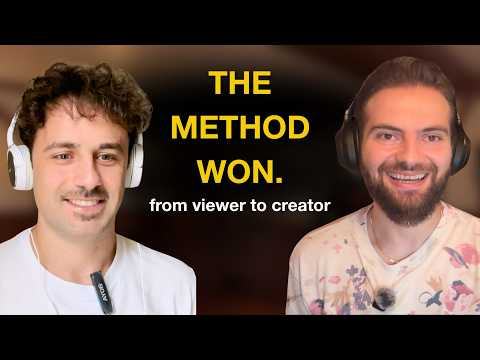
Kevin has learned languages with grammar books, with flashcards, with everything. Nine languages of trial and error. Then, for Arabic, he found comprehensible input, and it changed how he thinks about all of it. In this conversation we talk about what input actually did for his Arabic, why he now believes it beats every method he used before, and the best evidence there is: Kevin now creates comprehensible input himself, for French learners, on his channel Bonjour Baguette. From watching videos to making them. That is what seven months did. Kevin's French comprehensible input channel: https://www.youtube.com/@BonjourBaguette-ku3wr
Intermediate (B2) | free | 00:19:06