Duolingo Arabic Review: What It Teaches and Where It Stops
Duolingo Arabic is good for the alphabet and a first few hundred words. It is not going to get you understanding Arabic speakers, and the reason has less to do with the app than with a decision it made before you ever opened it: its Arabic course is Modern Standard Arabic, and Modern Standard Arabic is not what anybody speaks at home.
That is not a complaint about Duolingo. It is the single most important thing to know before you spend six months on it, and almost nobody tells you.
In this post
Which Arabic Duolingo actually covers
Duolingo offers one Arabic course for English speakers, and it covers Modern Standard Arabic, also called Fusha. There is no Levantine course, no Egyptian course, no setting to switch.
Modern Standard Arabic is real Arabic and it matters. It is the Arabic of the news, of books and newspapers, of speeches and school, and it is shared across all 22 Arab countries. If your goal is to read, to follow Al Jazeera, or to build a base for the Arabic of the Quran, MSA is the right thing to be studying and Duolingo is pointed in the right direction.
But nobody grows up speaking it. Arabs acquire a spoken variety at home, Levantine or Egyptian or Gulf or Moroccan, and learn Fusha later through school and media. So a learner who finishes the Duolingo tree and then lands in Beirut discovers that the sentences they practiced are not the sentences anyone says. I go through the choice properly in MSA or a dialect, which first?
So the honest first question is not whether Duolingo is good. It is whether you want the Arabic of the page or the Arabic of the street. If you want the street, the course is aimed somewhere else, however well it performs.
What Duolingo does well
Three things, and I would not take them away from anyone.
The alphabet. The course spends real time on the script, letter by letter, and this is the part it does best. Arabic letters change shape depending on where they sit in a word, which intimidates beginners more than it should, and drilling them in an app is a reasonable way through.
The habit. The streak works. Showing up every day is the one behavior that separates people who learn a language from people who talk about learning one, and Duolingo has engineered that better than anyone. Daily matters more than intensive, because the brain consolidates new memories during sleep, so seven short sessions across a week give it seven nights to work with instead of one.
The start. It is free, it is on your phone, and it asks nothing of you on day one. A learner doing fifteen minutes a day on Duolingo is ahead of a learner who bought a textbook and never opened it.
Where it stops, and why
Open the Duolingo Arabic course and look at what it asks you to do. Match the pairs. Choose the missing word. Translate this sentence. Tap the words in the right order.
Every one of those is a question about Arabic. None of them is Arabic happening to you.
That difference is the whole thing. People acquire a language by understanding messages in it, which linguists call comprehensible input: hearing or reading language you can follow, through context and pictures and gestures, even when you do not know every word. Stephen Krashen put that at the center of his theory more than forty years ago, and a 2021 review in Foreign Language Annals found that four decades of research since then had not shown its fundamental ideas to be wrong. I go through the evidence in does comprehensible input work?
An exercise that shows you one sentence at a time, in isolation, with the answer available, is building knowledge about Arabic. Useful knowledge. But it is not the same as following a person who is talking, at their speed, about something you care about, and that second thing is what you are actually trying to be able to do.
This is why the familiar complaint exists. People finish long streaks and still freeze when an Arab speaks to them. They did not fail. They practiced one skill and were hoping for another.
The second limit is simple size. Duolingo's Arabic course is a fraction of its Spanish and French courses, around fifty units against more than two hundred, so even taken on its own terms it runs out early. Arabic also sits in the longest category in the U.S. Foreign Service Institute's training estimates, around 88 weeks of full-time study for a professional level against 30 for Spanish, because it shares so little vocabulary with English. A course that is already short is shortest exactly where the language is longest.
But my friend learned Arabic on Duolingo
Some people do get real Arabic out of it, and it is worth being precise about what happened.
Usually they used Duolingo for the alphabet and the first vocabulary, and then they did something else: they watched Arabic television, they married into an Arab family, they moved somewhere, they found a tutor, they spent a year listening to things they enjoyed. The app got them in the door. The hours after it did the work.
That is a good outcome and the app deserves credit for the door. It just means the takeaway is not "Duolingo works," it is "Duolingo plus a lot of Arabic works," and the second half is the part nobody puts in the app-store review.
So what should you do with it
If you have a streak going, keep it. Protecting a daily habit is worth more than optimizing which app the habit lives in.
But change what the time is spent on. Once you can read the letters, the highest-value thing you can do is listen to Arabic you can follow, every day, in the kind of Arabic you actually want. Not native television on day one, which is noise, but content made to be understood by someone at your level, where visuals and context carry the meaning while your ear tunes.
Expect that to feel strange for the first twenty hours or so. Arabic will sound fast and the words will run together. That is your ear learning sounds English does not have, and there is no way around it. Somewhere between twenty and fifty hours, most learners notice words starting to jump out on their own.
Leave speaking until you have understood a good amount, then give it its own deliberate practice, because it does not appear by itself. More on the timing in why you shouldn't force yourself to speak Arabic too early. And put the vocabulary lists down: words stick by meeting them again and again in different contexts, which is the argument in why memorizing Arabic vocabulary doesn't work.
Where to go next
If you want the spoken Arabic of Syria, Lebanon, Jordan and Palestine, start with Levantine Arabic. If you want the Arabic of the news and the page, stay with Modern Standard and go deeper than any app will take you. Either way, every video on Arabic All The Time is built to be understood from the first minute, with free videos at every level, so you can test the whole argument in ten minutes rather than taking my word for it.
For the full picture of how to put it together, read how to learn Arabic, step by step, and for honest timelines, our roadmap.
Frequently Asked Questions
Is Duolingo Arabic good?
It is good for the alphabet, a first few hundred words and a daily habit. It is weak at getting you to understand spoken Arabic, because its exercises ask you questions about Arabic rather than giving you Arabic to follow, and because its Arabic course is short compared with its Spanish and French courses.
Does Duolingo teach Levantine or Egyptian Arabic?
No. Duolingo offers one Arabic course and it covers Modern Standard Arabic. There is no Levantine or Egyptian course and no setting to switch between varieties.
Can you become fluent in Arabic with Duolingo?
Not on its own. People who get real Arabic out of Duolingo almost always add something else, usually hundreds of hours of listening, a tutor, or time spent around Arabic speakers. The app is a reasonable door, not the room.
Is Modern Standard Arabic worth learning?
Yes, if your goal is reading, news, formal speech or religious texts. It is understood across all 22 Arab countries. It is simply not what people use in everyday conversation, so it is the wrong starting point if your goal is talking with people.
What should I use instead of Duolingo for Arabic?
Whatever gives you Arabic you can understand, every day, in the variety you want. That means video and audio made for your level, where context and visuals carry the meaning, rather than exercises about the language.
How long does it take to learn Arabic on Duolingo?
The course itself is short, so the real question is how long it takes to understand Arabic, and finishing the course won't get you there on its own. For honest timelines by level, see our roadmap.
Should I delete my Duolingo streak?
No. Keep the habit and change the activity. A daily routine is hard to build and easy to lose, and it is the most valuable thing the app gave you.
References
Krashen, S. D. (1982). Principles and Practice in Second Language Acquisition. Pergamon Press.
Lichtman, K., and VanPatten, B. (2021). Was Krashen right? Forty years later. Foreign Language Annals, 54(2), 283 to 305.
Stickgold, R., and Walker, M. P. (2013). Sleep-dependent memory triage: evolving generalization through selective processing. Nature Neuroscience, 16(2), 139 to 145.
U.S. Foreign Service Institute. Foreign Language Training. U.S. Department of State.
More apps and reviews
 Is There a Dreaming Spanish for Arabic? An Honest Answer (From Someone Who Did Both)Is there a Dreaming Spanish for Arabic? Yes in method, not yet in scale. Why Dreaming Spanish works, why Arabic never got its version, what the research says about video input for Arabic, and what Arabic All The Time is and honestly isn't yet.Jul 17, 2026 · 14 min read
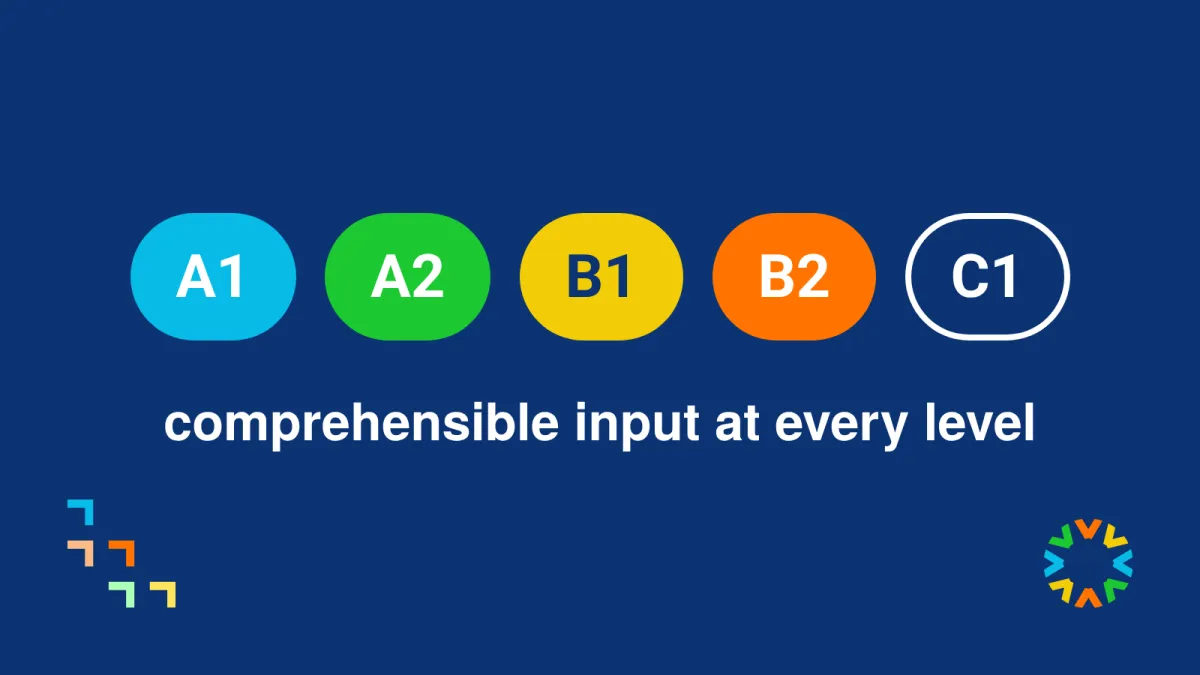 The Best Comprehensible Input Platform for ArabicWhy Arabic All The Time is built entirely around comprehensible input, what that changes for a learner, and who it was made for. Leveled videos in Levantine and Modern Standard Arabic by native speakers, new videos added daily, and live crosstalk with the founder.Apr 28, 2026 · 13 min read
 What is Arabic All The Time?Arabic All The Time is a comprehensible input video library for Levantine and Modern Standard Arabic: hundreds of videos you can actually understand, leveled from absolute beginner to advanced, with new videos added daily. What it is, who built it, how it works, and what it costs.Mar 9, 2026 · 14 min read