Browse Arabic comprehensible-input videos by level, topic, guide, dialect, and plan.
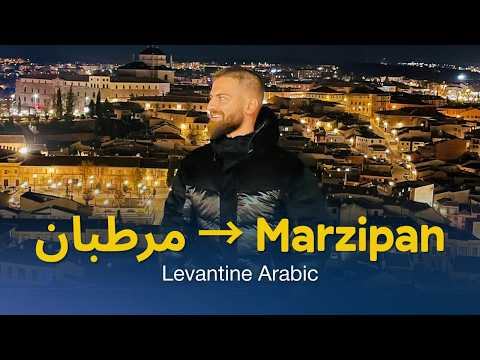
Spain's Most Famous Sweet Came From Syria (A2)
Toledo is the marzipan capital of Europe. I went there partly to eat it. The thing nobody tells you is where it is from. Marzipan is a Levantine sweet, from Syria and the countries around it, and the word itself is Arabic. مرطبان became marzipan. In Syria we do not call it that at all. We call it اللوزينا, and I love it. So in the last photograph of me on this trip I am standing in the dark in a black jacket and jeans holding a paper bag, and the bag is full of marzipan I had just bought. The rest of this video is Toledo at night, which is the best version of it. The cathedral lit up, a family crossing the square with a pram, children on fairground rides instead of a PlayStation, a Christmas tree covered in blue light, souvenir shops selling fridge magnets, and streets so full you could barely walk. I love crowds. Spain in December is nothing but crowds and I was very happy. And the last photograph is the one I keep going back to. The bridge, the river, the palace, and the moon above all three. My heart melted like ice cream. Walking around that city hearing Arabic names and seeing Arabic decoration everywhere I looked made me happier than I expected to be. Simple descriptive Levantine Arabic, around A2. Vocabulary: كاتدرائيه, ساحه, زحمه, العاب, اضواء, سوفونيرز, مغناطيس, المرزبان, اللوزينا, القمر.
Beginner (A2) | premium | 00:14:22
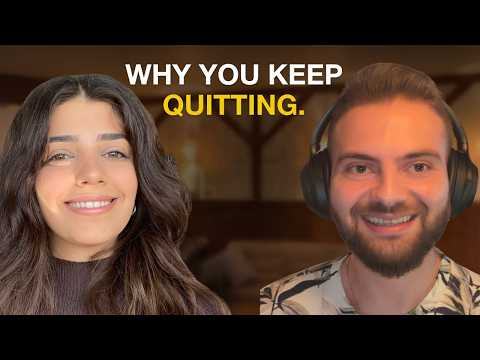
A Teacher on the Mistake Most Arabic Learners Make.
Rachel is an Arabic teacher from Lebanon. She lives there, she teaches Modern Standard Arabic and Lebanese Arabic, and in this conversation she tells me how she got here and what she sees in her students. She has loved Arabic since she was a child, the sound of it and the way the letters are pronounced, and that's why she chose to teach it. Like most people in Lebanon she learned English and some French at school, because Lebanese schools teach three languages at the same time. She studied primary school Arabic teaching at the Lebanese University, then did a master's in educational administration. She used to teach at a school and now gives private lessons, Modern Standard Arabic to children and Lebanese to children and adults. I asked her why people come to her. Some need Arabic for work, some have Lebanese roots and want to talk to their relatives, some want to read the Qur'an. And very often the reason is a partner who is Lebanese. Her advice is to watch Lebanese series and listen to Lebanese songs, a lot, because you have to hear a language before you can speak it. The mistake she sees most is stopping and starting, two weeks on and two weeks off. The other is not knowing what you want, starting with Modern Standard Arabic, switching to Lebanese halfway, and then getting lost because the same letters sound different. And on the days you feel like stopping, she says keep listening anyway. You can find Rachel on Instagram, her page is Lahjati (@lahja_ti).
Intermediate (B2) | free | 00:18:09
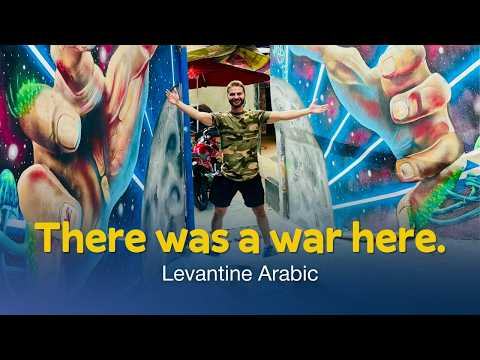
Why Do Tourists Come to Comuna 13 Now?
When I landed in Medellin I went straight out for coffee. Colombia is famous for it and I was not going to wait. I ordered it cold, because it is warm in Colombia, and then sat with the cup in front of a park, watching people walk past, a bit lost and trying to work out what to do with myself. Medellin is a strange city in the best way. Mountains everywhere, and houses all over the mountains, thousands of them, right up the slopes. The next day I joined a walking tour of Comuna 13, the thirteenth neighbourhood, the one everybody has heard of. It is famous because there was a war there. Years of violence. None of that now: there are tourists from America and Canada and Australia and Europe, bars and restaurants, painted houses in every colour, and graffiti on every wall, which is what people come to see. I could not read a word of what any of it said. We walked the narrow streets, past the shops and the houses, and I took far too many photographs of electricity cables, because they are everywhere and I found them fascinating. There is a woman selling hats. There are motorbikes. There is a crowd. I was a bit unwell while I recorded this one, so my energy is lower than usual. I say so on camera and I will say it here too. Photo format, clear Levantine Arabic. More Colombian cities are on the way.
Beginner (A2) | premium | 00:17:33
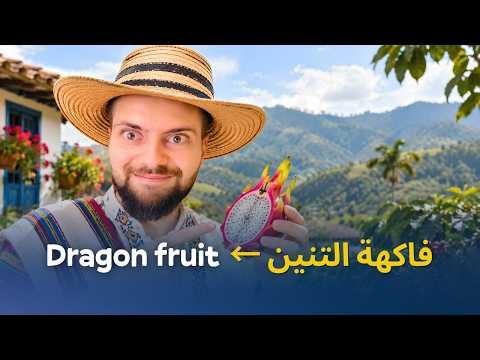
Colombia Has Fruit I Had Never Seen Before
I went to a food market in Bogota and I was not ready for it. Four pineapples sitting in a row. Bananas everywhere, yellow and green. Apples, red and green. Mangoes in piles. Broccoli, cauliflower, onions, cucumbers, kiwi, mandarins. And then a fruit I had genuinely never eaten in my life: فاكهة التنين, dragon fruit. Colombia was the first place I ever tried it, and it was lovely. While I was standing there I worked out why the market looks like that. Colombia sits on the equator, so the climate is tropical, so the fruit is tropical: mango, pineapple, dragon fruit, banana. Mandarins and oranges and pomegranates are not tropical at all. Those come from around the Mediterranean: Syria, Lebanon, Greece, Italy, Spain, Portugal, Tunisia, Morocco, Algeria, Egypt. And in Canada, where I live now, there is no pomegranate and no mango. Not much fruit at all, honestly. Along the way you get the words for all of it, and the difference between فواكه and خضروات, which is one of those distinctions you only really learn by having somebody point at things. The full library, 400+ videos in Modern Standard Arabic and Levantine Arabic, organized by level from Super Beginner to Advanced: https://arabicallthetime.com Hear from other learners, or share your own story: https://arabicallthetime.com/reviews Arabic Journeys podcast on Spotify: https://open.spotify.com/show/60ofkXIaju9Zhz04kGrbNB
Beginner (A2) | premium | 00:12:39
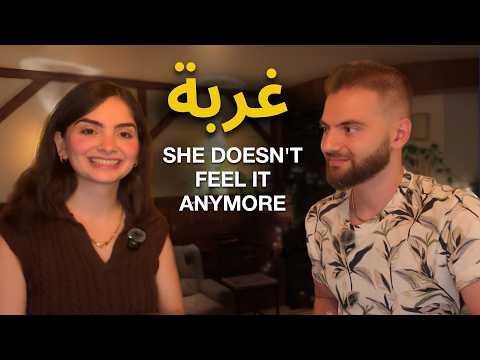
My Sister on Living Far From Home.
There is an Arabic word for the ache of being far from your country: غربة. Today my sister Lotus and I talk about what it actually feels like, and how it changes. Lotus has spent most of her adult life away from Syria, and her answer surprised me: she does not feel غربة anymore. Montreal is her second country now. But she remembers exactly what the first years felt like, the sadness of not being around people who look and speak like her, the pressure to adapt fast, and the strange mix of grief and excitement that comes with a new country. We talk about the small rituals that keep home close: mate, which reached Syria from Argentina with returning emigrants and is the number one drink in our town Salamiyah, dabke, which is our region's dance more than it is Damascus's or Aleppo's, family barbecues, Syrian coffee, Fairuz in the morning. And her advice to anyone who just arrived somewhere new: do not rush the transition, keep your own habits while you adopt new ones, and make friends, because once you have friends the other problems start solving themselves. The full library, 350+ videos in Modern Standard Arabic and Levantine Arabic organized by level from Super Beginner to Advanced: https://arabicallthetime.com
Intermediate (B2) | free | 00:14:42
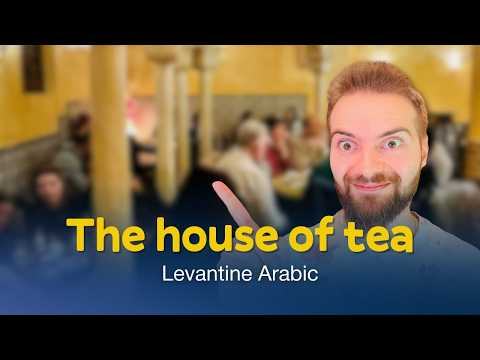
They Still Have Andalusi Tea Houses in Spain
There is a tea house in Toledo called دار الشاي. The house of tea. It is not a café in the modern sense. It is a place people gather to sit together, talk, laugh and drink tea, and the whole idea of it comes from Al Andalus, from the centuries when Arabs and Muslims ruled this part of Spain. The decoration inside is Andalusi: carved plaster, columns, arches, low warm light. One man was sitting on something that was definitely not a chair and I still do not know what it was. It was also extremely noisy. People in Spain talk loudly, in the cafés and the bars and the restaurants, and I love that about the place. Then the old Jewish quarter, and a very old synagogue with a white door, lion statues and a small window. There was a Palestinian flag on it. I had seen Palestinian flags in a lot of places in Spain, but seeing one there surprised me, so I took the photograph. After that an empty narrow street with nobody in it except me, door after door after door, all houses. Then the big church, and the crowds, and the Christmas market, and the tree, and the lights, and a young woman doing a television interview in the middle of the street. Simple descriptive Levantine Arabic, around A2. Vocabulary: مقهى, دار الشاي, مجتمعين, الديكور الاندلسي, عمود, قنطره, ضجه, شارع ضيق, فاضي.
Beginner (A2) | premium | 00:11:39

I Was Going to Keep This One Private.
I am driving home after a very good day, and I want to tell you something I have not said on the channel. I love travelling. In my old engineering job I was on a plane every six weeks. After I left it I spent five or six months moving through seven countries. Then in December 2025 I came back to Montreal with exactly one goal, and I have barely left the city since. The goal was this. The first year and a half of Arabic All The Time was failure after failure, and in December I decided to give it one last serious attempt. Could one person with no company behind him, no investors and no sponsors, build the largest comprehensible input library in Arabic and make it last? It is working. The videos multiplied, the subscribers came, the emails started arriving, and the motivation went from high to very high. That is the good part. Here is the part I have not said. The routine I am living is not sustainable. Every hour, every bit of energy and every dollar goes into this, it is never quite enough, and there is always more to do. I do not get to the gym. I do not eat the way I want to. I have not seen my friends properly in months and those friendships have suffered for it. So I am asking you, honestly. How do I put a limit on this? How do I get back to a life where I can travel and still build this properly? I am better at setting limits than I was at the start. I am still not good at it. This project feels like a small baby to me and I am afraid to leave it alone for a moment. That fear is the problem. Tell me in the comments. If you have done this, or you are in the middle of doing it, I want to hear how.
Intermediate (B2) | free | 00:15:38
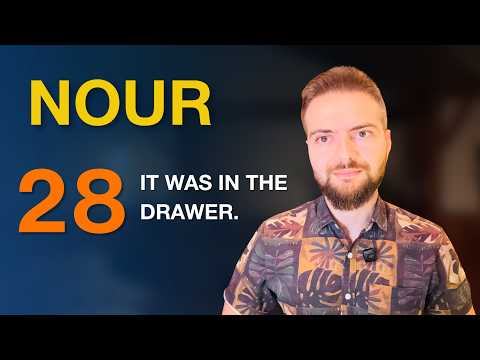
Nour 28: He Lasted One Morning
Muhannad in a suit, behind his father's desk, on his first day running the company. It lasts about an hour. The secretary knocks. آسفة على الإزعاج سيد مهند. His grandfather has sent a file, wants a detailed report on it, has set no deadline, and has told him to work with an expert called Adam Bey. Then she says how glad everyone is that he is back, ما حدا فات على مكتبك طول هالسنة. He answers كلك ذوق. Then he opens the drawer. There is a photograph in it, of him and Nihal. He is out of the building before the secretary can finish saying his name. Across town, Fajr calls Aisha with news he refuses to give her over the phone. And in Fikri Bey's office, the secretary delivers the report nobody wants to deliver. Muhannad left. مرة بيهرب من العرس ومرة ثانية بيهرب من الشغل. Tariq asks his uncle to be patient with the boy. أنا أكثر من هيك ما عاد عندي صبر. I explain الإزعاج, ملف, تقرير مفصّل, كلك ذوق, بيهرب, and طوّل بالك. Next episode: Nour says the wrong thing to the kindest woman in the house.
Intermediate (B1) | premium | 00:15:11
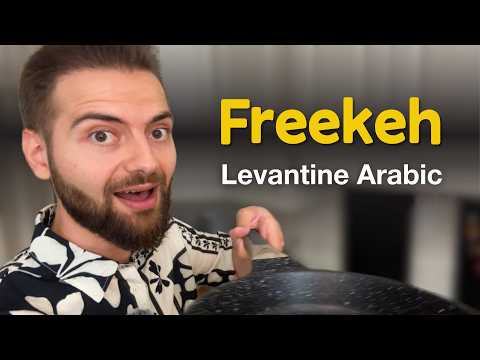
I Cooked Freekeh Mansaf at 8 at Night
It is eight at night, I have not eaten all day, and I decided to cook the most involved thing in my kitchen. Freekeh. Wheat picked while it is still green and then roasted, which is why it tastes like nothing else on the shelf. It comes from Bilad al-Sham, Syria and Lebanon and Palestine and Jordan, and it is in Egypt too. Tonight it becomes mansaf with grilled meat. Two jobs at once. A ribeye on the bone, cut into two steaks, seasoned and carried out to the grill in the garden, while the freekeh toasts in samneh in the kitchen. Salt, black pepper, seven spices. Almonds in a small pan on the side. It was eleven degrees outside and I refused to put a jacket on. Neither job went perfectly. While the freekeh cooked I sat down with the laptop, because it takes half an hour and there was work waiting. And there was an email. A very long one, from a premium member, describing his whole history with Arabic before Arabic All The Time and after it. I read it on camera and I did not really know what to say when I finished. I still do not. Yasmine comes home partway through, after six hours of studying, with groceries from Adonis. A real kitchen, nothing staged, in clear Levantine Arabic, around B2. Vocabulary: السمنة, محمّصة, البهارات السبعة, المقلاية, حمّص الفريكة, تغلي, المكسّرات.
Intermediate (B2) | free | 00:34:08
Toledo Gets Busier After the Sun Goes Down
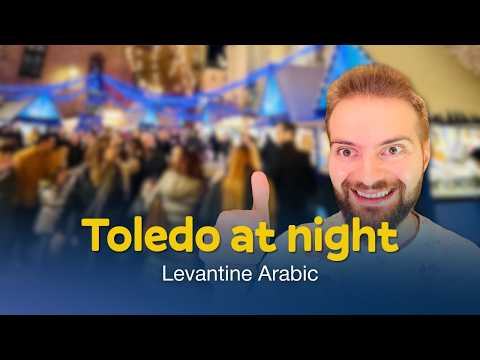
After the palace I walked down into the centre of Toledo, and the main square surprised me. A tour group with a guide in the middle of it. I was not with them, I was on my own with a camera. Christmas decorations everywhere, an enormous bauble, a crescent, and stalls selling souvenirs and food and clothes. The Spanish flag with its coat of arms over all of it. Then crowds. A woman pushing a pram with a baby inside it, a mother walking with her small son, people buying sweets and snacks and food. A very large old church, and I think it is the cathedral, though I could not remember on camera. The sun was going down, and the thing I noticed is that Toledo gets busier at night, not quieter. In the morning there was space. By sunset there was none. And the streets. Narrow, properly narrow, with beautiful houses pressed along both sides, somewhere that might be a bar or a restaurant, cars squeezing through, and mountains sitting right behind the city. Simple descriptive Levantine Arabic, around A2. Vocabulary: ساحه, سياح, مرشد سياحي, مجموعه سياحيه, زحمه, عربايه, شوارع ضيقه, وقت المغيب.
Beginner (A2) | premium | 00:09:47
The City Where the Weather Never Changes
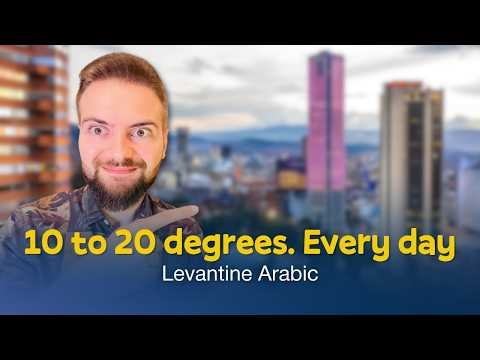
Bogota is the capital of Colombia and it is enormous. Nine or ten million people, I think. I say it on camera and then admit I had forgotten the number, which is what happens when you ask me for statistics. The thing nobody tells you is the weather. Bogota sits high up on a mountain, so it is never hot. The climate is tropical and the temperature barely moves: somewhere between 10 and 20 degrees, every day of the year. You wear a jacket at night. There were clouds the whole time, and I do not like clouds. I like sun. I rented a small studio on Airbnb in a tall building. The view from the window was the best part: colourful buildings in red and blue and orange and brown and white and yellow, and a big mountain standing behind all of them. Then I did what I always do on a first day. I found the gym in the building, which had almost no machines but did have free weights, so I did chest press. Then down to the supermarket for eggs, back up, and I fried four of them. The yolks in Colombia are a much darker yellow than I am used to, and they tasted better too. After that I sat and watched the city out of the window. That was day one. This is the photo format: I show you pictures from the trip and describe them slowly in clear Levantine Arabic, around A1. If the walking vlogs are still too fast for you, start here. The full library, 350+ videos in Modern Standard Arabic and Levantine Arabic organized by level from Super Beginner to Advanced: https://arabicallthetime.com #LearnArabic #LevantineArabic #Colombia #Bogota #ComprehensibleInput
Beginner (A2) | premium | 00:11:11

I Showed Maha One Photo and Said Nothing
New idea, and I want to know whether it works. I show Maha one photo. I tell her nothing. She has to work out where it was taken and what is happening in it, with nothing to go on but her own questions. The photo is from inside a tour bus belonging to Tinariwen. They are Tuareg, from the Sahara, and if you do not know them you should stop reading this and go and listen to them. Their singer is called Saddam. I met them in America around 2014 or 2015, when I was 21. Ten years later I saw them again in Toronto, and Saddam remembered me. Not my name. The Syrian. Watching Maha get there from nothing is the whole video. She asks, I answer, she narrows it down, and the Arabic you are hearing is two people genuinely working something out rather than performing a conversation for a camera. This is the first time we have tried this, so tell us in the comments whether you want more of it. Next time she picks the photo and I have to guess.
Intermediate (B1) | free | 00:17:51
Why Is There a Helicopter on This Palace?
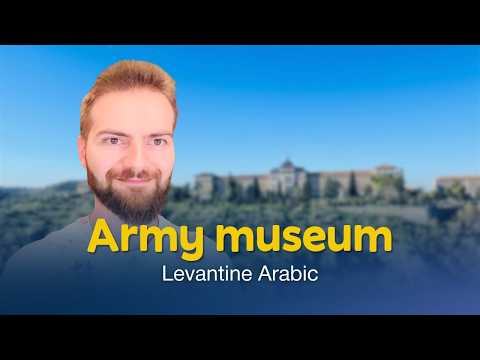
The Alcázar sits above everything in Toledo. It is enormous, built out of stone, and there is a tower on every single corner of it. Up on the terrace there is a large empty courtyard with one car parked in it, three statues of men I could not identify, the Spanish flag with its coat of arms, an old military helicopter and a green tank. The palace is an army museum now, so that is why. Inside there is a knight in old armour on a brown horse holding an arrow, rooms of antiquities, and a statue from Mexico that I liked more than anything else in the building. The inside of the palace itself is stripped back, very old and largely bare. The view out of it is worth the climb on its own. Afterwards I walked back out into the city, and it was Christmas, and the whole place had changed. Simple descriptive Levantine Arabic, around A2. Vocabulary: مبنى, حجر, برج, زاويه, ساحه فاضيه, تمثال, دبابه, متحف حربي, فارس, حصان.
Beginner (A2) | premium | 00:12:00
The Biggest Rock I Have Ever Seen
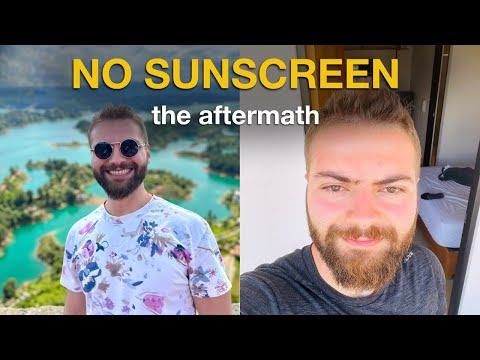
Guatapé is a tiny village in Colombia, and next to it there is a rock. Not a mountain. One rock, standing on its own, and it is enormous. The first time I saw it I was genuinely stunned. Around it there is a lake, forest, villas all along the water, and a mansion that I was told belongs to a singer. We crossed by boat and then we climbed. The stairs are concrete, built up through a crack in the rock, and they go up and up and up. The sun was strong. I was with a group and by the end of it people were in a bad way. I did not cry. I came close. Then you reach the top and you forget all of it. The lake is green and blue, the sky is clear, white clouds, forest in every direction. It is one of the best views I have ever stood in front of. Afterwards we went down into the village, which is small and about as colourful as a place can be. Colombians love colour. There is a street with umbrellas strung across it in yellow and green and orange and red, flags from everywhere including Canada and Mexico, and souvenir shops full of hats. I did not buy a hat. And at no point did I put on sunscreen. The next day my face was red. My cheeks, my nose, my forehead, even my eyes. I burned. Learn from me. Simple descriptive Levantine Arabic, around A2. Vocabulary: صخرة, درج, بحيرة, منظر, غابة, شمسية, نظارات شمسية, واقي شمس.
Beginner (A2) | free | 00:17:14
Nour 27: This Is Garbage. Throw It Outside.
تعي لشوف. And then Sharifa turns on her. شو هاد يلي عملتيه؟ شرشحتيني قدام الضيوف. Noor has no idea what she did. She served guests. She was praised. That was the crime. Sharifa picks up the embroidery Noor has been working on all day, the same work every guest in that room admired, and throws it on the floor. هي زبالة. Garbage. Take it outside. انتِ هون خانم، مرت مهند شاد أوغلو، مو خدامة. You are a lady in this house, the wife of Muhannad Şadoğlu, not a servant. يا عيب الشوم عليك. It is said the way you speak to a child who has lied. Elsewhere in the city, Dana takes a call from Kamal, and the calm goes out of her voice the second she asks for Alma. لمين تركتها؟ ما عم صدّق شو عم تحكي. Then someone knocks on Noor's door, and Noor hides the embroidery before she opens it. It is Maysoun, who looks around and says the room finally has life in it, and tells Noor that if anyone in this house upsets her, come straight to me. Noor says nobody is upsetting her. I explain شرشحتيني, زبالة, خانم, خدامة, يا عيب الشوم عليك, and لسانها طويل. Next episode: Muhannad's first day at work lasts about an hour.
Intermediate (B1) | premium | 00:15:55