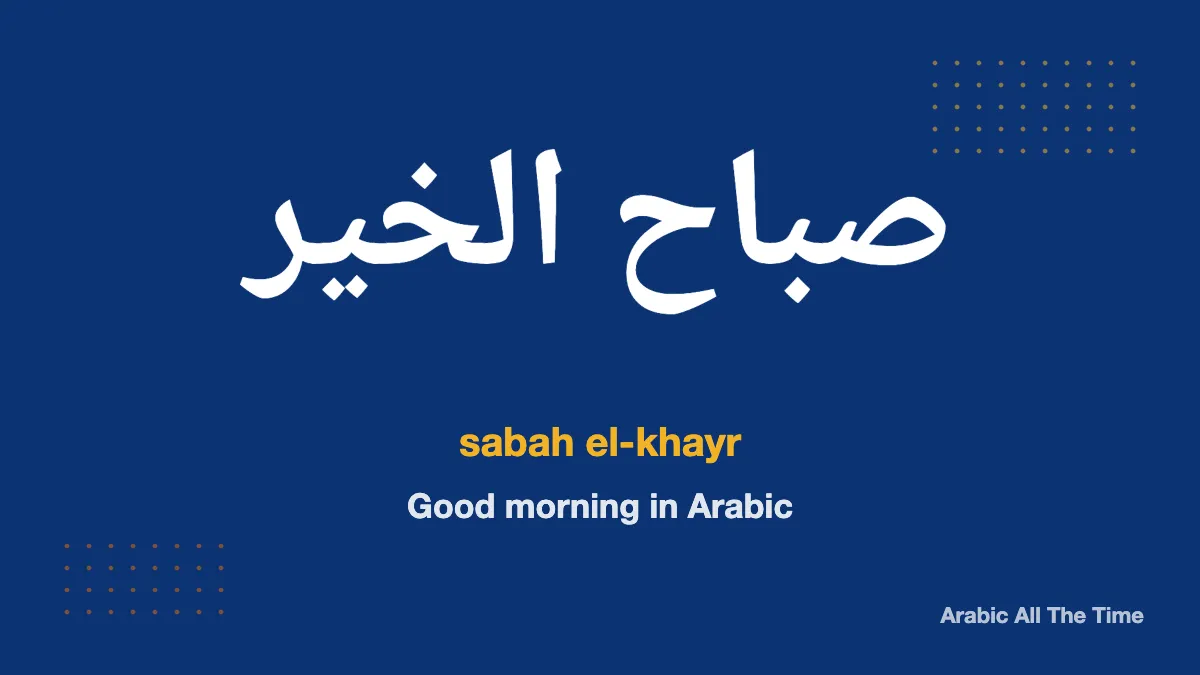
Good morning in Arabic is sabah el-khayr (صباح الخير), "morning of goodness." The reply is sabah en-nour (صباح النور), "morning of light." Every Arab knows this pair, and it works with anyone, from your boss to the man selling you coffee.
In the Levant, though, people love to play with it. The reply often gets more and more poetic, and a simple good morning can turn into a small competition of flowers.
Sabah el-khayr and sabah en-nour
Sabah (صباح) means morning, and el-khayr (الخير) means goodness. In Modern Standard Arabic it's pronounced sabah al-khayr, and in spoken Arabic you'll hear sabah el-kheir or just sabaho (صباحو).
The classic answer is sabah en-nour. You can also simply say sabah el-khayr back, and nobody will mind.
The Levantine flower game
In Syria and Lebanon, the reply to good morning is a chance to be warm. Instead of light, you can wish someone a morning of flowers.
- Sabah el-ward (صباح الورد): "morning of roses"
- Sabah el-full (صباح الفل): "morning of jasmine," the small white Arabian jasmine
Friends go back and forth with these, and the person who runs out of ideas first loses. You'll also hear yis'ed sabahak (يسعد صباحك), "may your morning be happy," to a man, and sabahik to a woman.
Good evening in Arabic
Good evening follows the same pattern. Masa el-khayr (مسا الخير) is "evening of goodness," and the reply is masa en-nour (مسا النور). People switch from sabah to masa somewhere around the afternoon, and there's no exact hour.
Good night in Arabic
Good night is different, because it's a wish for tomorrow. Across the Arab world you say tisbah 'ala khayr (تصبح على خير) to a man, "may you wake up to goodness," and tisbahi 'ala khayr to a woman. To a group, tisbahu 'ala khayr.
The reply is lovely. You say w enta min ahlo (وانت من أهله) to a man and w enti min ahlo to a woman, roughly "and you're one of its people," meaning "you too, you deserve that goodness."
You'll also see layla sa'ida (ليلة سعيدة), "happy night." It's correct, and you'll find it in writing and on greeting cards, but at home people say tisbah 'ala khayr.
Formal and spoken Arabic
Good morning and good evening are almost the same in formal and spoken Arabic, which makes them a gentle place to start. Good night is the one place you'll notice a difference. Cards and messages often say layla sa'ida, while people at home say tisbah 'ala khayr, which is correct in formal Arabic too. I wrote more about that in MSA or a dialect, which first?
Hear it in real conversations
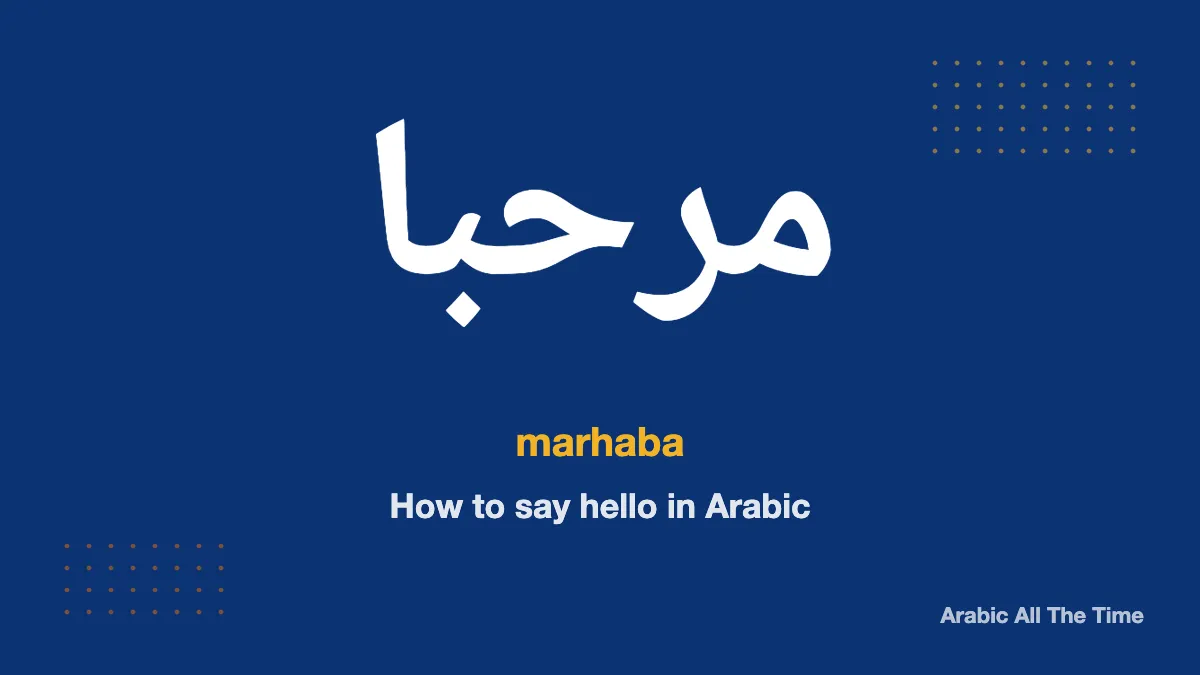
Greetings like these happen before the camera starts rolling more often than after, so they're rarer in my videos than you'd think. One you can hear is at the start of an evening call with Maha, who's in Lebanon. I greet her with "masa el-khayr," and she points out that it's already ten o'clock there, so it's not evening anymore, it's night (0:17). For the other greetings people open conversations with, see how to say hello in Arabic.
Every video on Arabic All The Time is made to be understood from the first minute, with free videos at every level. For the Arabic people actually speak in Syria, Lebanon, Jordan and Palestine, start with Levantine Arabic.
Frequently Asked Questions
How do you say good morning in Arabic?
Sabah el-khayr (صباح الخير). It works in every Arab country, formal or casual.
How do you reply to sabah el-khayr?
Say sabah en-nour, "morning of light." In the Levant you can also answer sabah el-ward, "morning of roses," or sabah el-full, "morning of jasmine."
How do you say good night in Arabic?
Tisbah 'ala khayr to a man and tisbahi 'ala khayr to a woman. The reply is w enta min ahlo, or w enti min ahlo to a woman.
How do you say good evening in Arabic?
Masa el-khayr, and the reply is masa en-nour.
What does sabah el-full mean?
It means "morning of jasmine," a warm reply to good morning that you'll hear in the Levant and even more in Egypt. Full is the small, strongly scented Arabian jasmine.
Is layla sa'ida used for good night?
It's correct and common in writing and on cards. In everyday speech people say tisbah 'ala khayr, which also works in formal Arabic.