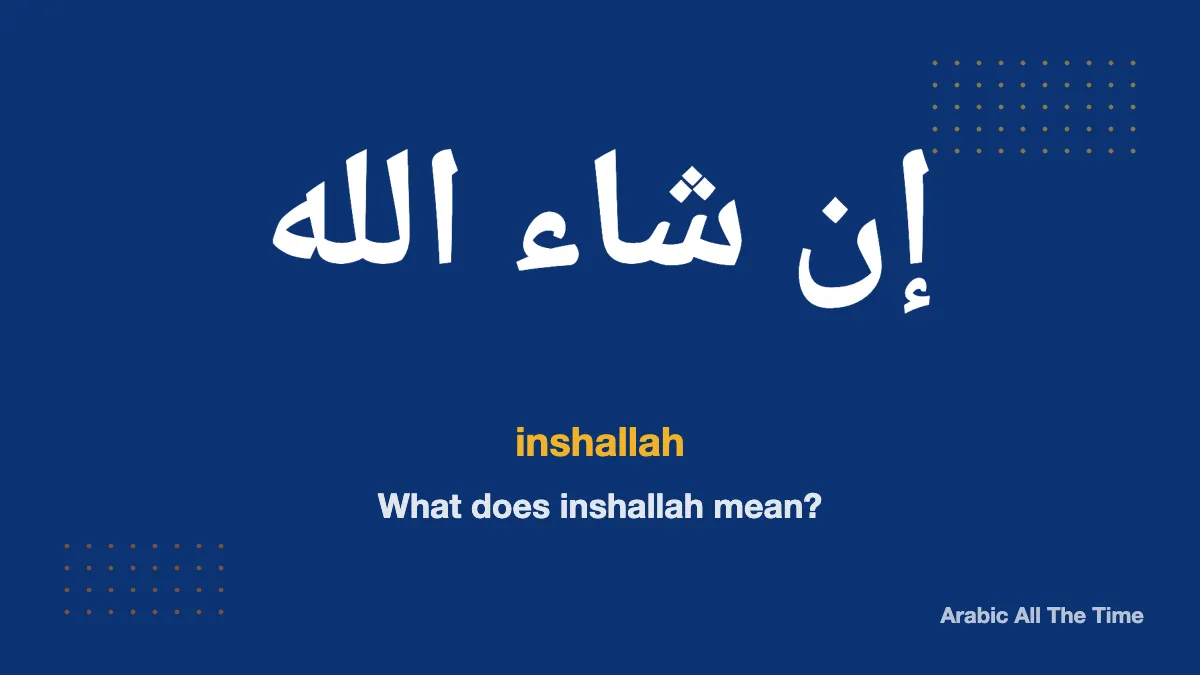
Inshallah (إن شاء الله) means "if God wills." Arabs say it whenever they talk about the future, from a meeting tomorrow to a trip next year, and you'll hear it many times in a single conversation.
It started as a religious phrase, and for many people it still carries that meaning. In daily life it has also become one of the most flexible words in Arabic. It can be a sincere hope or a polite way to say no, and the tone tells you which.
What inshallah means, word by word
It's three words. In (إن) means "if." Sha'a (شاء) means "willed" or "wished." Allah (الله) means God. Together they mean "if God wills."
In speech the three words run together into one, inshallah. In Syria and Lebanon you'll often hear it even softer, inshalla, with no h at the end.
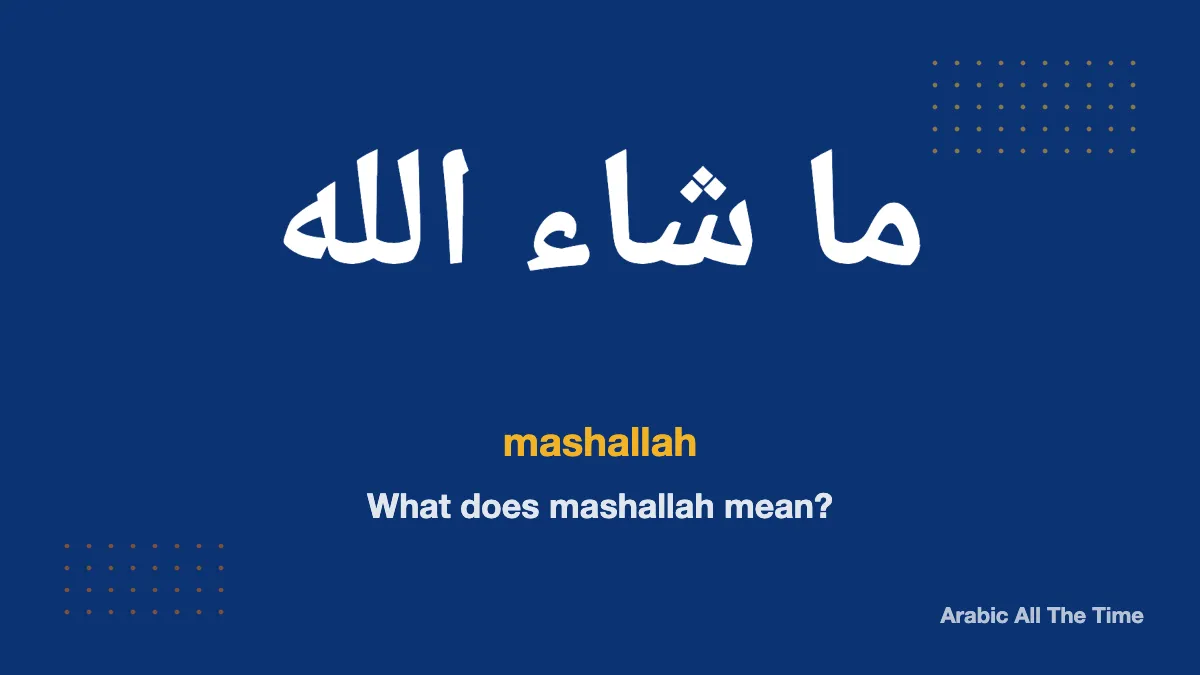
Inshallah is always about the future. For something good that already happened, Arabs say mashallah instead, which I explain in What does mashallah mean?
Where inshallah comes from
The phrase comes from the Quran. In Surat Al-Kahf (18:23 to 24), Muslims are told not to say they will do something tomorrow without adding "if God wills." Saying inshallah is a reminder that the future isn't fully in our hands.
Over the centuries it moved from religion into everyday Arabic. Today Arab Christians say it too, and so do many people who aren't religious at all. For them it works more like "hopefully."
How people really use it
- A real hope. "Bshoufak bukra inshallah" (بشوفك بكرا إن شاء الله) is "see you tomorrow, inshallah." The person fully plans to come.
- A good wish. When something unexpected happens, like a phone call late at night, people say inshallah khayr (إن شاء الله خير), "hopefully it's good news."
- A polite maybe. Ask a busy friend to come to your party and you may get an inshallah that means "I'd like to, but don't count on it."
Does inshallah mean no?
Usually it doesn't. Most of the time it's a real yes, said with a bit of humility. But every Arab child knows the other inshallah. You ask your parents for something you want badly, they say inshallah, and you already know the answer.
The difference is in the tone and the context. A quick, warm inshallah with a specific plan attached is a yes. A slow inshallah with no details and a vague smile is closer to a no. If you're not sure, you can always ask for a time.
How to spell inshallah
In Arabic the correct spelling is three words, إن شاء الله. You'll also see إنشاء الله written as two words online, but that spelling changes the meaning, because insha' (إنشاء) is a noun meaning "creation." Native speakers make this mistake all the time, and others love to point it out.
In English you'll see inshallah, insha'Allah and in sha Allah, and all of them are accepted.
How to reply to inshallah
- Inshallah back is always fine.
- Ya rabb (يا رب), "oh God," meaning "may it be so," is what you'll hear most in the Levant.
- Allah yisma' minnak (الله يسمع منك), "may God hear you," is a warm reply when someone wishes you something good. To a woman, minnik.
Hear it in real conversations
You'll understand the different inshallahs much faster by hearing them than by reading about them. In a video where we follow the Turkish drama Nour, I say it three times in a row while wondering what will happen next (0:32). A minute later you'll hear "khayr inshalla," "hopefully it's good" (1:42). And when Muhannad asks Nour if she wants to keep eating, she says she's full and adds dayme, what you say to thank someone for a meal. Right after, I repeat it as "dayme inshallah" (2:24). In a conversation with Maha, she says "inshalla t'ejeb en-nas," "I hope people like it" (1:42).
Every video on Arabic All The Time is made to be understood from the first minute, with free videos at every level. For the Arabic people actually speak in Syria, Lebanon, Jordan and Palestine, start with Levantine Arabic.
Frequently Asked Questions
What does inshallah mean in English?
Inshallah means "if God wills." In everyday speech it often works like "hopefully."
Is inshallah only used by Muslims?
No. The phrase comes from the Quran, but Arabs of every religion use it in daily life, including Arab Christians and people who aren't religious.
Does inshallah mean no?
Usually it means a sincere yes or hope. Sometimes it's a polite way to avoid saying no, and the tone and context tell you which.
How do you respond to inshallah?
Say inshallah back, or ya rabb, "may it be so." When someone wishes you something good, Allah yisma' minnak, "may God hear you," is a warm reply.
How do you spell inshallah correctly?
In Arabic it's three words, إن شاء الله. In English inshallah, insha'Allah and in sha Allah are all accepted.
Can non-Muslims say inshallah?
Yes. Arabs of all backgrounds say it, and when a non-Arab says it sincerely, people usually take it as a warm, respectful gesture.