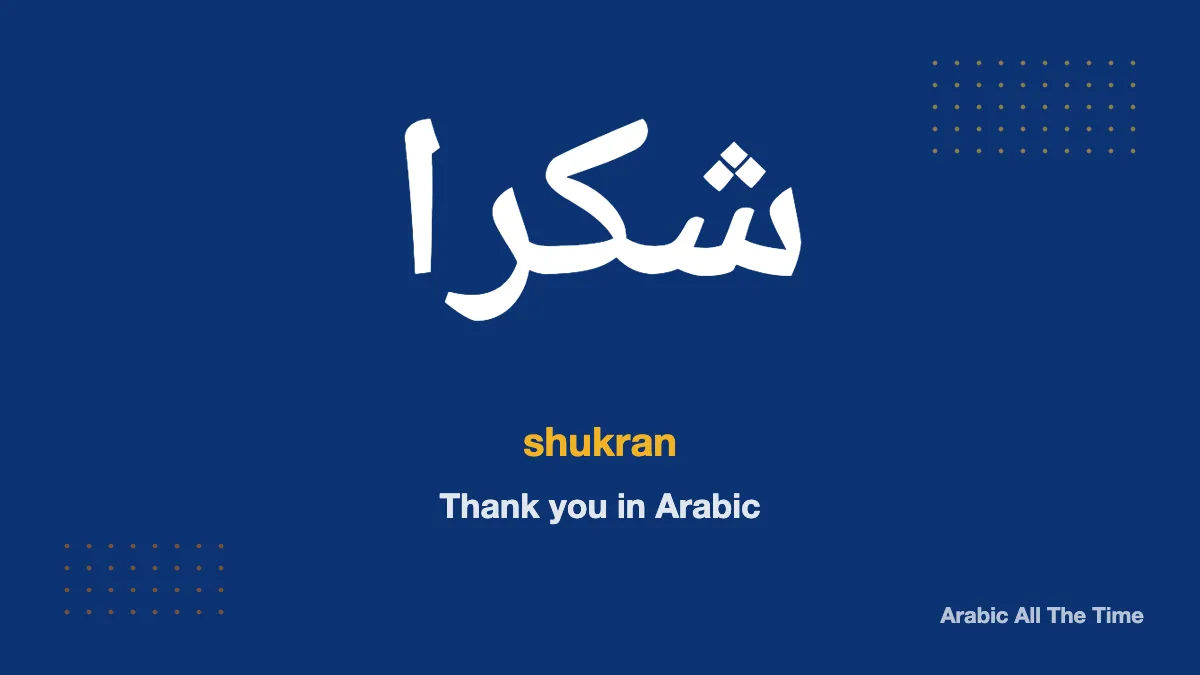
Thank you in Arabic is shukran (شكرا). It works in every Arab country and in any situation. If you only learn one way to say thank you, learn this one.
But spend an afternoon in a café in Beirut or Damascus and you'll notice people don't say shukran as often as you'd expect. You'll hear merci, yislamu and tislam at least as much, and each one fits a slightly different moment.
Shukran: the one that works everywhere
Shukran comes from shukr (شكر), gratitude. It's the same in Modern Standard Arabic and in every spoken dialect, and it's never wrong.
To say "thank you very much," it depends on where you are.
- Shukran ktir (شكرا كتير) is how we say it in Syria, Lebanon, Jordan and Palestine. Ktir means "a lot."
- Shukran jazilan (شكرا جزيلا) is the formal version you'll find in textbooks and hear in speeches. In a shop it sounds a little stiff.
- Alf shukr (ألف شكر), "a thousand thanks," is warm and works almost anywhere.
Merci: why Lebanese and Syrians say it
In Lebanon and Syria, merci (مرسي) is one of the most common ways to say thank you. It spread through French schools and the French Mandate over Syria and Lebanon (1920 to 1946), and it never left. People say it the French way, "mersi," and mix it freely with Arabic: "merci ktir," "merci habibi."
People who don't speak French say it too. It's an ordinary Arabic word now, like "café" in English. You'll also hear it in Egypt.
Yislamu and tislam: thanks with a blessing
These two are my favorite, because they're so Levantine.
Yislamu (يسلمو) literally means "may they be safe." On its own it works as thanks for almost anything. The full phrase is yislamu ideyk (يسلمو إيديك), "may your hands be safe," for when someone did something for you with their hands, like cooking a meal or pouring you tea. To a woman it's yislamu ideyki (يسلمو إيديكي). After a dinner at someone's home, it's what you say to the person who cooked.
Tislam (تسلم), "may you be safe," is a thank you aimed at the person. You say tislam to a man and tislami (تسلمي) to a woman. Someone holds the door for you, you say tislam.
Other ways you'll hear
- Mamnoun (ممنون) means "I'm grateful." It's a little more formal, and warm.
- Jazak Allah khayran (جزاك الله خيرا) means "may God reward you with good." Many Muslims use it, especially for a real favor.
How to reply when someone thanks you
The textbook answer is afwan (عفوا), "you're welcome," and it works everywhere. In the Levant you'll hear these too.
- Tikram (تكرم) to a man, tikrami (تكرمي) to a woman. Literally it means "be honored," something like "my pleasure," and it's what I'd say without thinking.
- Walaw (ولو), "of course, no need to thank me."
- Ahlan (أهلا) or ahlan wa sahlan, "you're welcome here," which turns the thanks back into hospitality.
The spoken and formal versions often differ like this in Arabic. Textbooks teach the formal words, and the street uses others. If you want to understand people in daily life, you need the spoken ones. I wrote more about that choice in MSA or a dialect, which first?
Hear it in real conversations
You'll remember these words much better from hearing them used than from any list. In a video with my twin sisters, Lutas tells me she loves me and I answer "mersi mersi, shukran," both in one breath, the way people really talk (8:58). In a conversation with Maha, she thanks me for the idea of the game we played, "mersi 'al fikra," and I thank her back (17:10). At the end I say "shukran ktir lal mutaba'a," "thank you so much for watching" (17:45).
You’ll hear bhebbak and habibi in the same conversations.
Every video on Arabic All The Time is made to be understood from the first minute, with free videos at every level. For the Arabic people actually speak in Syria, Lebanon, Jordan and Palestine, start with Levantine Arabic.
Frequently Asked Questions
How do you say thank you in Arabic?
Shukran (شكرا). It works in every Arab country and every situation. In Syria and Lebanon, merci and yislamu are just as common in daily life.
What does shukran mean?
Shukran means "thank you." It comes from shukr, the Arabic word for gratitude.
How do you say thank you very much in Arabic?
In Levantine Arabic, shukran ktir. In formal Arabic, shukran jazilan. Alf shukr, "a thousand thanks," works almost anywhere.
How do you respond to shukran?
Afwan, "you're welcome," works everywhere. In the Levant people also say tikram to a man or tikrami to a woman, or walaw, "of course."
Why do Lebanese and Syrian people say merci?
Merci spread in Levantine Arabic through French schools and the French Mandate (1920 to 1946), and stayed. Today it's an ordinary Arabic word, used by people who don't speak French at all.
Is it rude to say merci instead of shukran?
No. In Lebanon and Syria merci is completely normal. Shukran is never wrong either, so if you're unsure, use shukran.