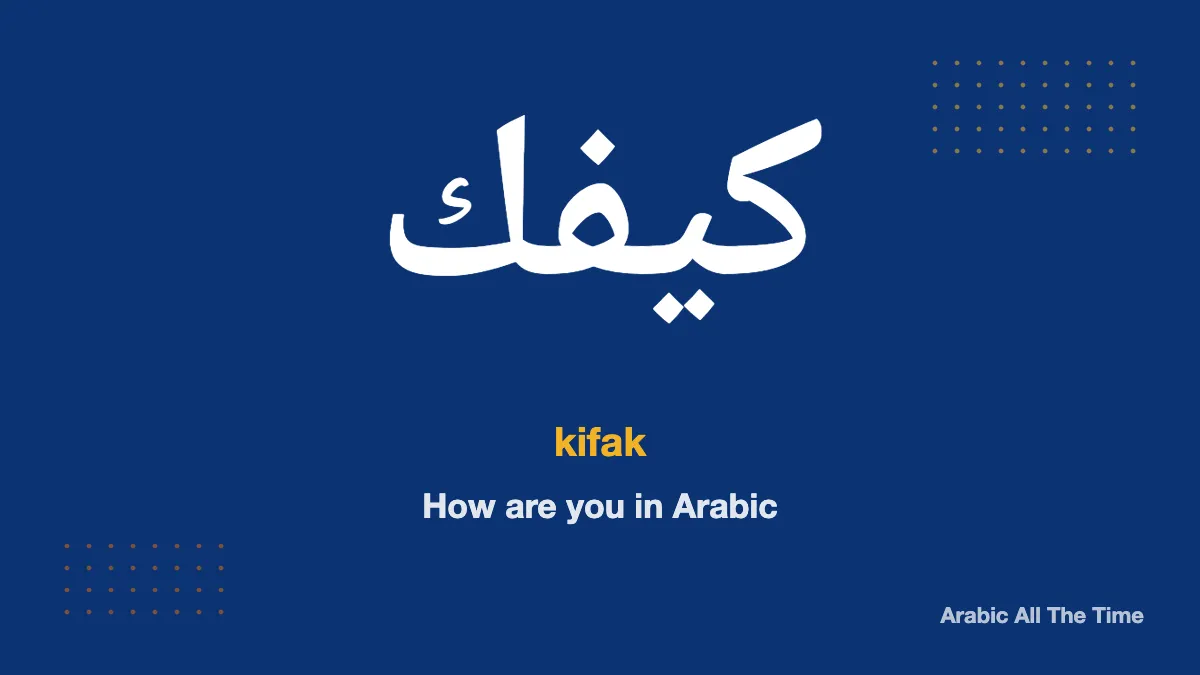
In everyday spoken Arabic in Syria, Lebanon, Jordan and Palestine, "how are you?" is kifak? (كيفك) to a man and kifik? to a woman. The most common answer is el-hamdulillah, mnih, "thank God, good," and then you ask back.
Like most Arabic greetings, it changes with who you're talking to and where you are. Here's what you'll actually hear, and what to say back.
Kifak, kifik and kifkon
- To a man: kifak? (كيفك)
- To a woman: kifik? (كيفك)
- To a group: kifkon? (كيفكن)
You'll often hear it right after the hello, and people like to stack questions. Shu akhbarak? (شو أخبارك), "what's your news?", and kif es-sahha? (كيف الصحة), "how's your health?", are common follow-ups. To a woman, shu akhbarik?
How to answer
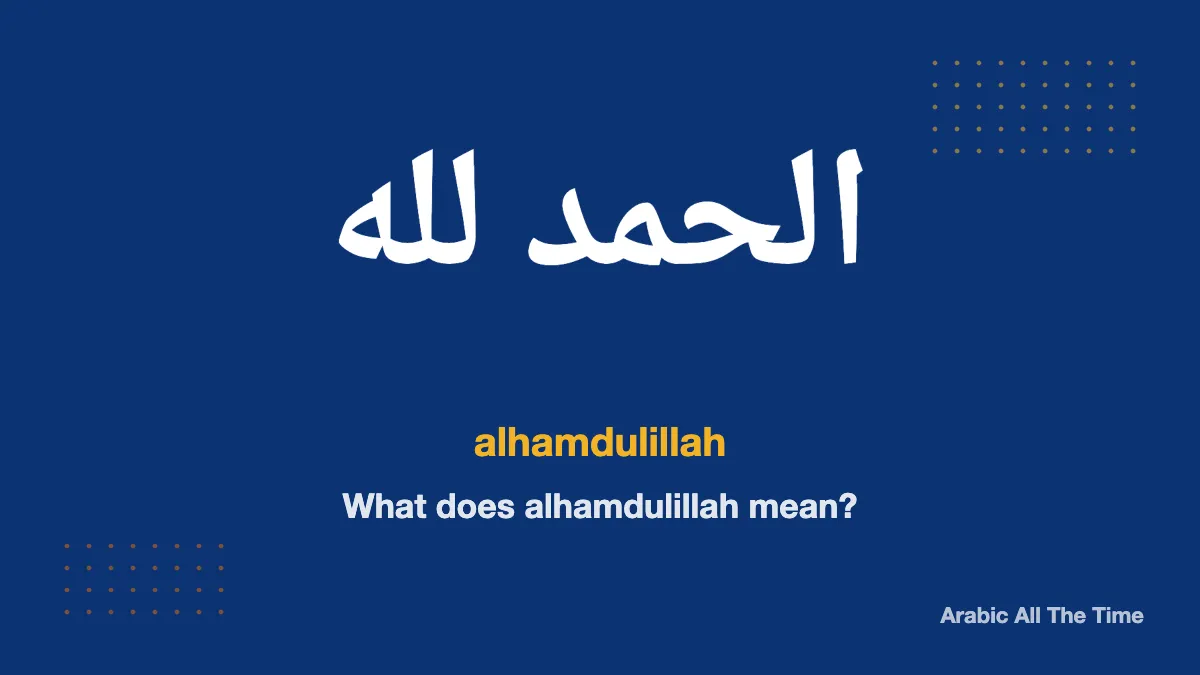
- El-hamdulillah, "thank God." This usually comes first, whatever your day is like. I explain why in what does alhamdulillah mean?
- Mnih (منيح) if you're a man, mniha (منيحة) if you're a woman: "good."
- Tamam (تمام): "fine," the same for everyone.
- Mashi el-hal (ماشي الحال): "getting by," an honest "so-so."
Then ask back. W enta? to a man, w enti? to a woman, "and you?" Or repeat the question, kifak enta? Skipping this part sounds a little cold, so don't forget it.
How are you in formal Arabic
In Modern Standard Arabic it's kayfa haluka? (كيف حالك) to a man and kayfa haluki? to a woman, "how is your state?" The answer is ana bikhayr (أنا بخير), "I'm well."
Every Arab understands it, and you'll hear it on the news and in formal settings. In a café you'll hear kifak. I wrote more about how the two kinds of Arabic fit together in MSA or a dialect, which first?
How are you in other dialects
- Egyptian: ezzayak? to a man, ezzayek? to a woman.
- Gulf and Iraqi: shlonak? to a man, and shlonich? to a woman in much of the Gulf and Iraq.
- Moroccan: labas? which literally means "no harm?", answered with labas too.
A real exchange, start to finish
A: Marhaba! Kifak?
B: Ahlan! El-hamdulillah, mnih. W enta?
A: Tamam, el-hamdulillah. Shu akhbarak?
That's hello, how are you, the answer, the question back and a follow-up, all in a few seconds. If you want the greeting part, read how to say hello in Arabic.
Hear it in real conversations
I start almost every conversation with this. With Maha, I ask "kifik el-yom?", "how are you today?", and she answers "marhabtein, el-hamdulillah mniha, kifak enta?" (1:40). With my sister Lutas, I stack two questions, "kifik? shu akhbarik?", and she answers "el-hamdulillah mniha" (0:26). In a conversation with Colette, a learner, I ask "kifik awwal shi?", "first of all, how are you?", and she answers "ktir mniha, w enta?", "very good, and you?" (0:46). And with both twins, I ask Yasmine first and then Lutas, and you'll hear two different answers back to back (2:05).
Every video on Arabic All The Time is made to be understood from the first minute, with free videos at every level. For the Arabic people actually speak in Syria, Lebanon, Jordan and Palestine, start with Levantine Arabic.
Frequently Asked Questions
How do you say how are you in Arabic?
In Levantine Arabic, kifak? to a man and kifik? to a woman. In formal Arabic, kayfa haluka? to a man and kayfa haluki? to a woman.
How do you answer kifak?
El-hamdulillah, mnih (or mniha if you're a woman), then ask back with w enta? or w enti?
What does shu akhbarak mean?
"What's your news?" It's a friendly follow-up to kifak, and to a woman it's shu akhbarik?
How do you say how are you in Egyptian Arabic?
Ezzayak? to a man and ezzayek? to a woman.
What does kayfa haluka mean?
It's "how are you?" in Modern Standard Arabic, said to a man. To a woman it's kayfa haluki? The answer is ana bikhayr, "I'm well."
Why do Arabs answer how are you with alhamdulillah?
Because the habit is to thank God first, whatever the day is like. Alhamdulillah often comes before "good," and sometimes replaces it.